My Jungle Junction
Sariska is an Aravalli tiger reserve near Delhi and Jaipur, with hill forest, temples and forts. Its tigers were reintroduced from Ranthambore in 2008, and the population has been recovering ever since.
My Jungle Junction's Guide to Sariska Tiger Reserve
1,203
sq. km reserve
1 + 1
Core + Buffer zones
1978
Declared National Park
Sariska Tiger Reserve Safari Packages
At My Jungle Junction, Amit and the team build Sariska Tiger Reserve itineraries around how the park actually works: which gate suits your dates, how many safaris give a fair chance of good sightings, and where to sleep so early starts stay painless. We book permits and vehicles well ahead, keep groups small, and can pair Sariska Tiger Reserve with other reserves on the same trip. Tell us your dates and pace and we will shape a plan rather than hand you a fixed list.
How Many Safaris Should You Do in Sariska Tiger Reserve?
Sariska's tigers are shy and the terrain is large, so patience pays. We usually recommend three to four safaris, mixing mornings and afternoons, to give you a fair chance of a sighting while enjoying the forest, birds and leopards. Because the reserve is easy to combine with Jaipur or Delhi, it also works well as a short break. We handle bookings and confirm the routes available.
Best Safari Zones
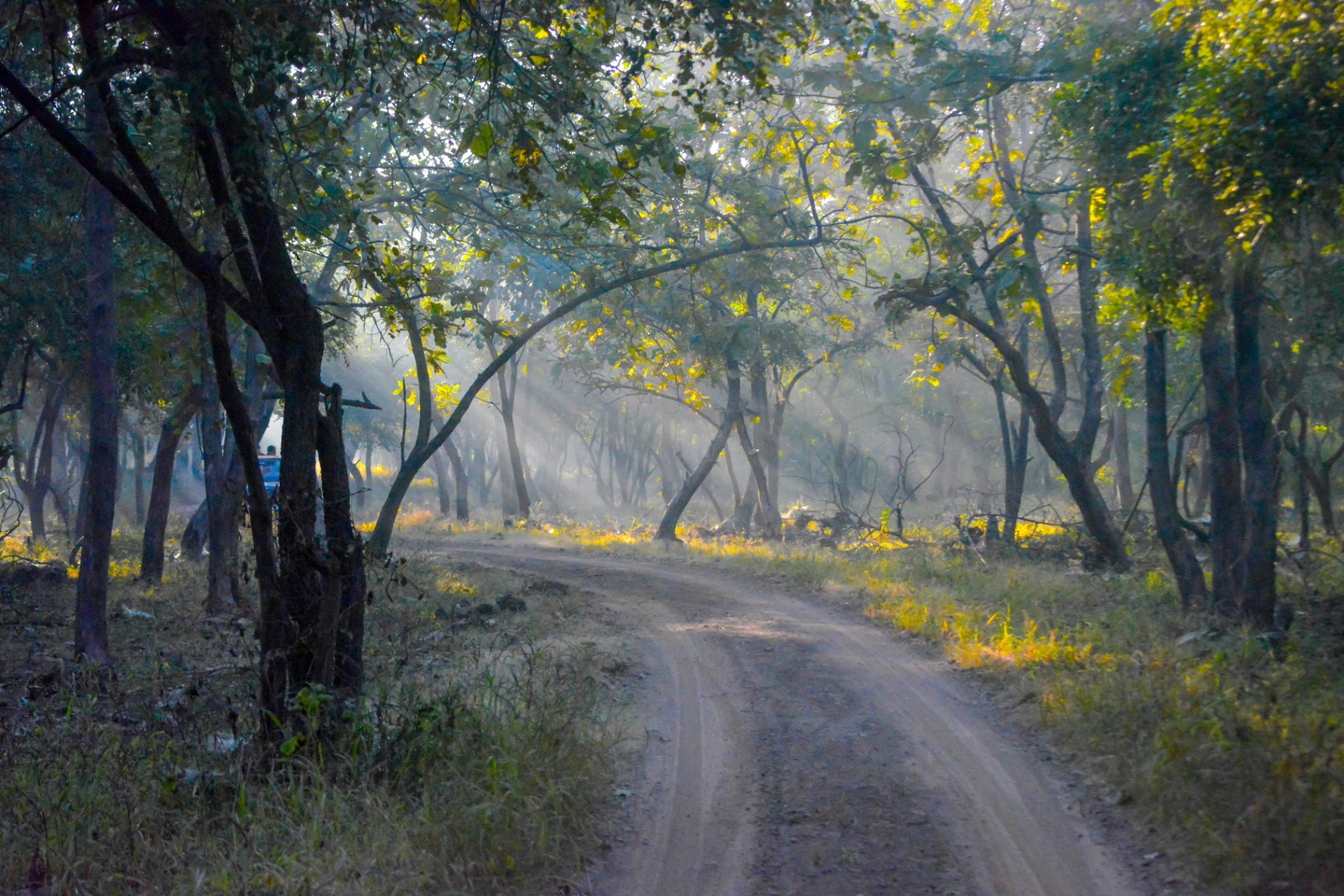
Sariska's main tourism gate is Tehla, where safari vehicles enter and routes spread out into the hills. Inside the reserve are places of historical and religious interest, including Kankwari Fort on one of the large plateaus, and temples such as Bhartrihari and Pandupol, which pilgrims visit. The tourism area is only a part of the large reserve, and a lot of the core is closed to the public. Routes, vehicle numbers and permits are controlled by the forest department and may change, so we confirm current arrangements for your dates.
The main safari entry, from which vehicles enter the tourism area of the reserve.
Forest tracks into the hills and valleys, with chances of tiger, leopard, sambar and nilgai.
A historic fort on one of the reserve's two large plateaus, within the wider reserve.
A well-known temple inside the reserve, visited by pilgrims and often combined with safaris.
A site with a temple and a natural gorge, associated with the Mahabharata and visited by pilgrims.
How to Reach & When to Visit
Jaipur and Delhi are the nearest airports. Jaipur is roughly 3 hours by road, and Delhi around 4 to 5 hours, depending on traffic.
Alwar Junction is the nearest major railhead, connected to Delhi and Jaipur. A taxi from Alwar to Sariska takes about an hour.
Sariska is reached by road from Delhi via Gurugram and Alwar, and from Jaipur via Dausa. Roads are good, and we arrange private transfers.
October to June is the main season, with winter most comfortable and summer best for tiger sightings.
Cool and clear, with pleasant weather. Good for birds, leopards and general wildlife, though mornings can be cold in open jeeps.
Hot, but animals visit waterholes and foliage is thin, which improves your chances of seeing tigers. Go early.
Safaris in the core are generally closed during the rains. Check with us for the current rules and dates.
MJJ Insight : Sariska safaris are booked through the Rajasthan forest department and the number of vehicles is limited. Book early for weekends and winter, and let us confirm your Tehla gate timings.
The Wildlife of Sariska Tiger Reserve
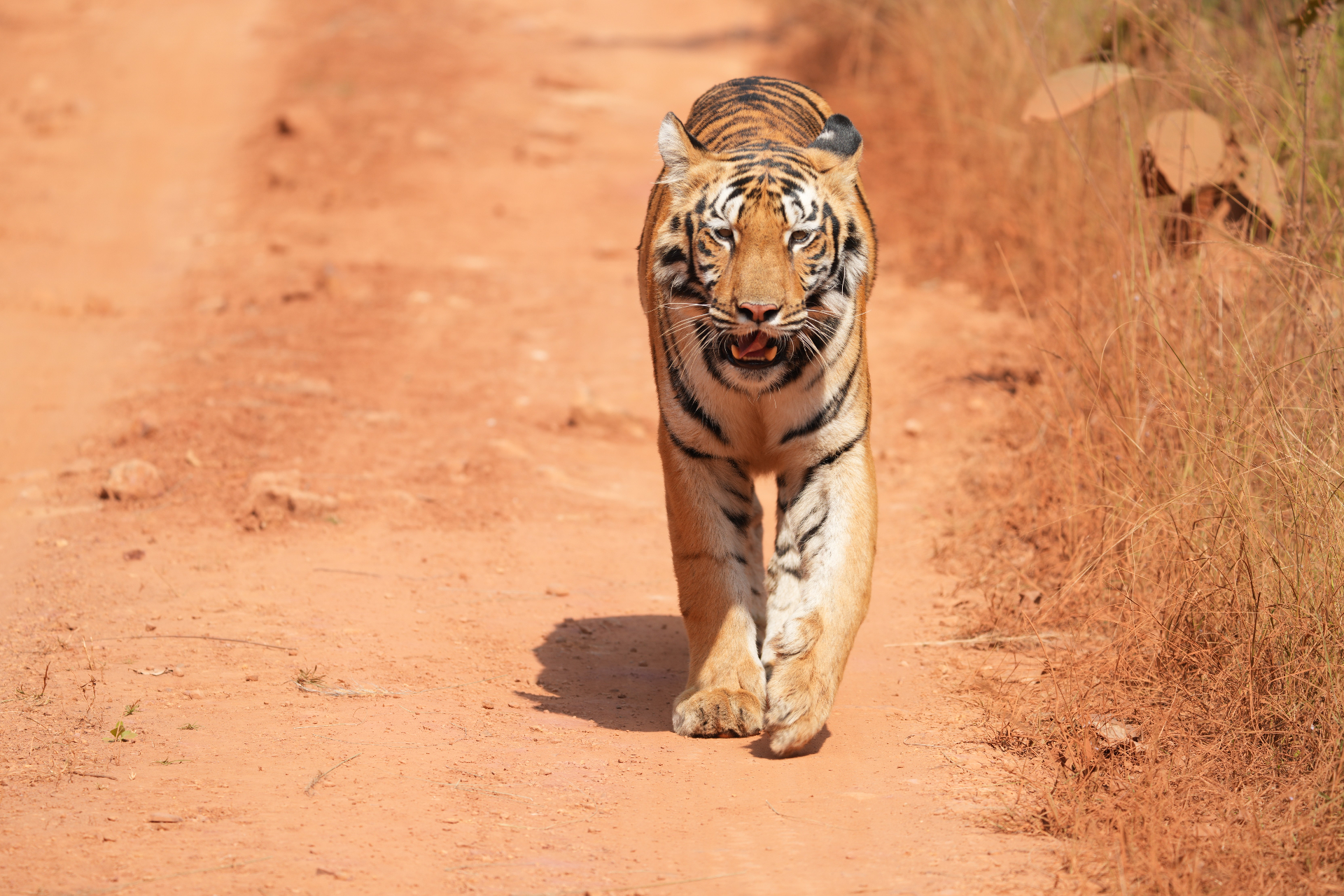
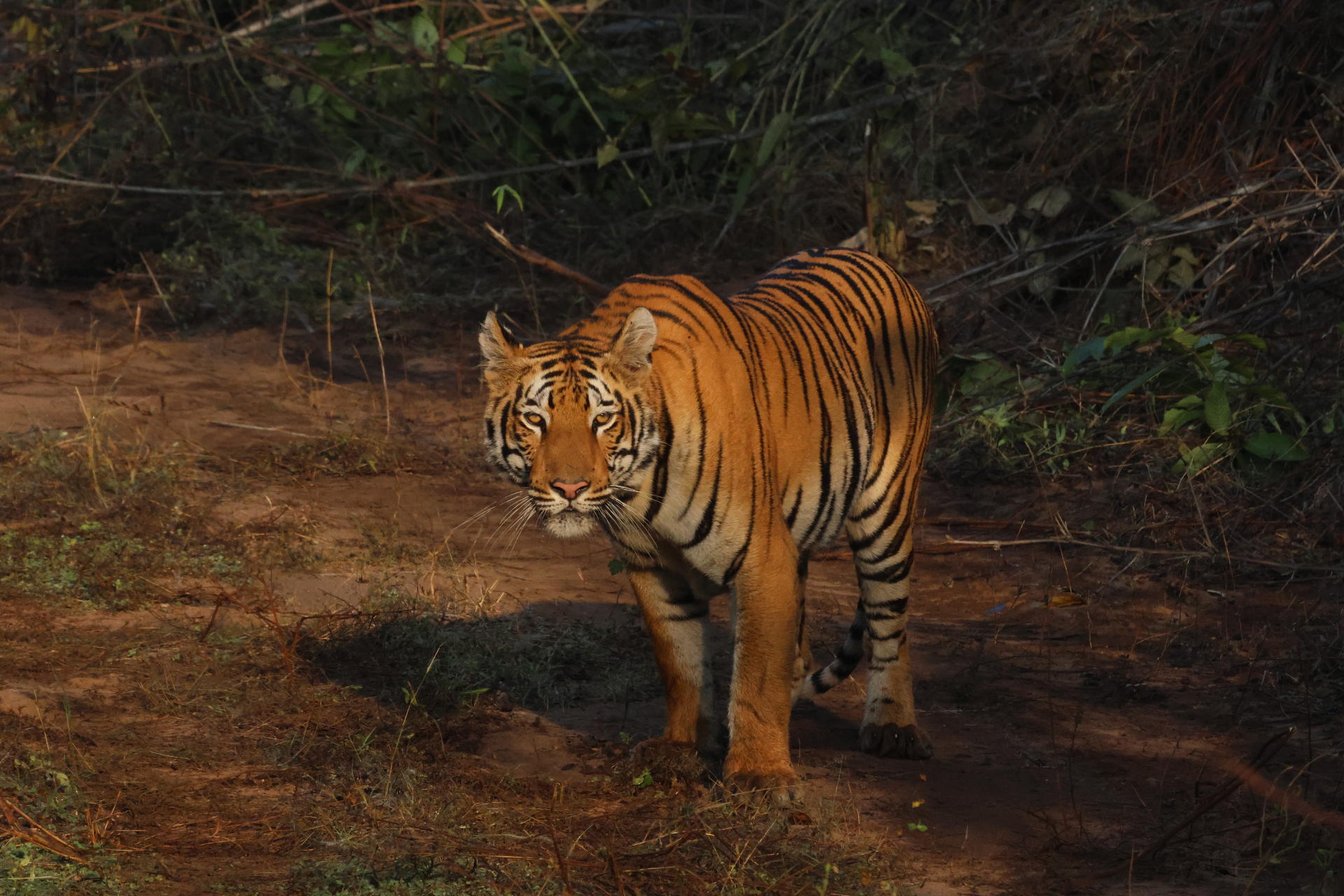
Sariska's wildlife is typical of the Aravalli hills. Tigers have been reintroduced and are breeding, and leopards are fairly common on the rocky slopes. Other predators include striped hyena, jackal, jungle cat and caracal. Herbivores include sambar, chital, nilgai, wild boar and four-horned antelope. Langurs and rhesus macaques are everywhere, especially near the temples. Sariska is very good for birds, with peafowl, grey junglefowl, Indian eagle-owl, crested serpent eagle, golden-backed woodpeckers and many raptors. Reptiles include python, monitor lizard and cobra. Tiger sightings are possible but less predictable than at the best-known parks.
Sariska's Tiger Reintroduction
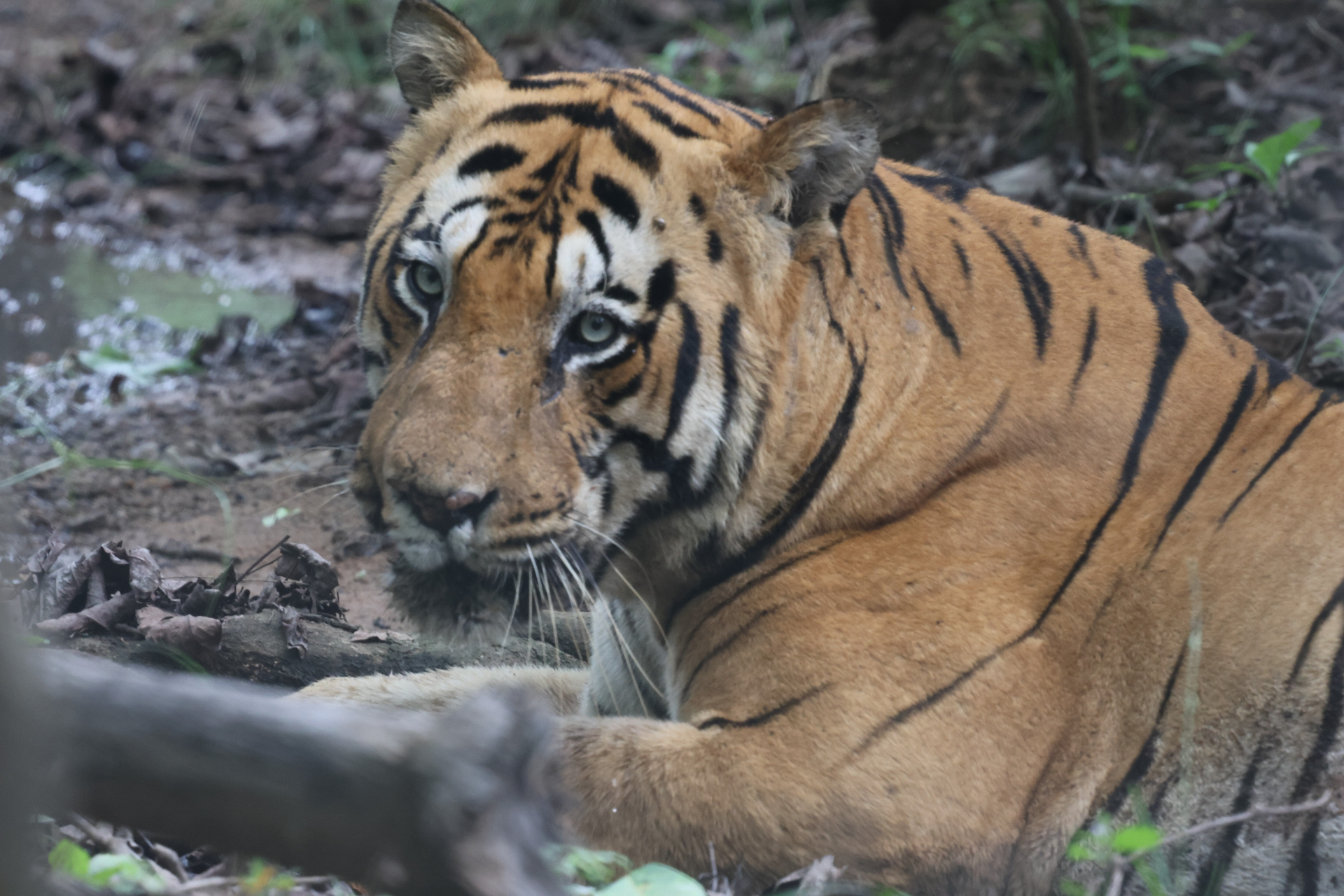
Sariska is famous for what happened to its tigers. Poaching wiped them out by 2004, and in 2008 a male (ST1) and a female (ST2) were brought from Ranthambore. Since then, breeding and further translocations have steadily rebuilt the population. The project has had setbacks, but it remains one of the most closely watched tiger recovery efforts in India.
Your Stay in Sariska Tiger Reserve
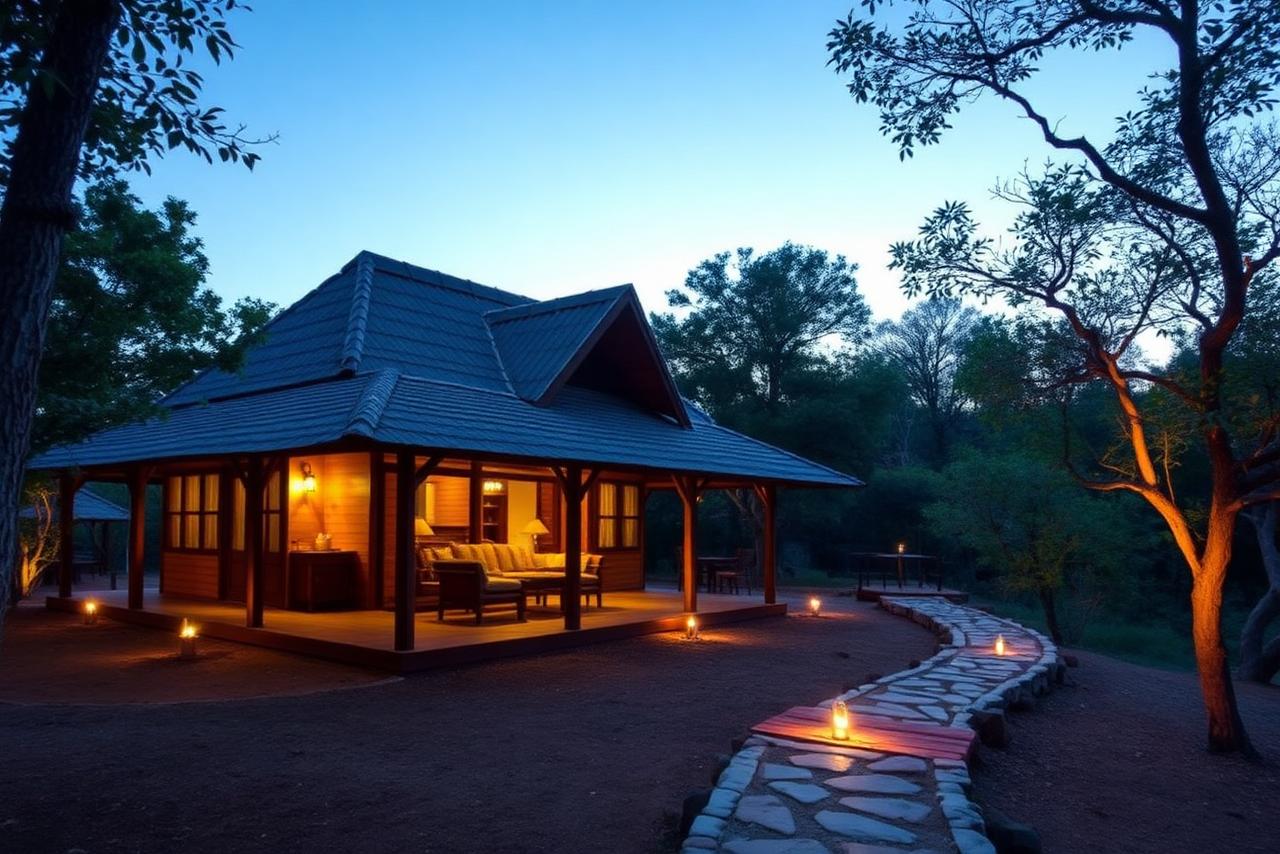
Most lodges and resorts are near Tehla gate and along the road between Alwar and Sariska, giving easy access for early starts. Options range from heritage-style hotels, including the former hunting lodge associated with the royal family, to comfortable resorts and budget guesthouses. Choose by how close you want to be to the gate, your budget and the style of stay. Alwar town offers more choice and facilities, with a longer morning transfer. Because Sariska is close to Delhi and Jaipur, weekends and holidays fill up, so book early. We can recommend a stay to suit your needs.
Plan My StaySafari Etiquette
Why Should You Visit Sariska Tiger Reserve
Sariska is one of India's most important tiger recovery stories. After tigers were lost to poaching, the reserve became a pioneering case of tigers being translocated from another reserve, and the population has been rebuilding since 2008. It also offers dramatic Aravalli scenery, ancient temples and a historic fort, so a safari can sit alongside culture and sightseeing. Because it is so close to Delhi and Jaipur, it makes an easy short break. Come for the landscape, leopards and birds, and see a reserve that shows how conservation can recover from setbacks.
Plan My SafariFAQs
Share your details and we'll call you at your preferred time.